


Your Week on Paper – The Calm of Writing in a Weekly Planner
A gentle, grounding exploration of why your week deserves to breathe — and how writing it down can softly can change the way you feel.
Most of us begin a new year with a sense of quiet optimism. There is a familiar ritual to it — picking up a fresh planner, uncapping a new pen, placing the first date on a clean spread. It feels like a soft promise to ourselves. A belief that this year, we’ll carve out more rhythm, more time, more calm. That this year, we’ll be consistent.
But real life moves differently. Days fluctuate. Energy rises and drops. Emotions swell unexpectedly. Meetings spill over. Meals get delayed. Some mornings you wake with clarity; some mornings you wake already behind. And the daily-planning formats we rely on start collapsing under the weight of real life.
By February — sometimes earlier — we look at the planner we were so excited about and feel a quiet ache. Blank days become guilt. Missed entries feel like personal failures. The structure that was meant to hold us begins to feel like something we must keep up with. It’s not a lack of discipline. It’s not a lack of motivation. It’s simply misalignment.
Daily structures don’t match human rhythms.
Weekly ones do.
And something remarkable happens when you take your week — not your day — and gently place it on paper.
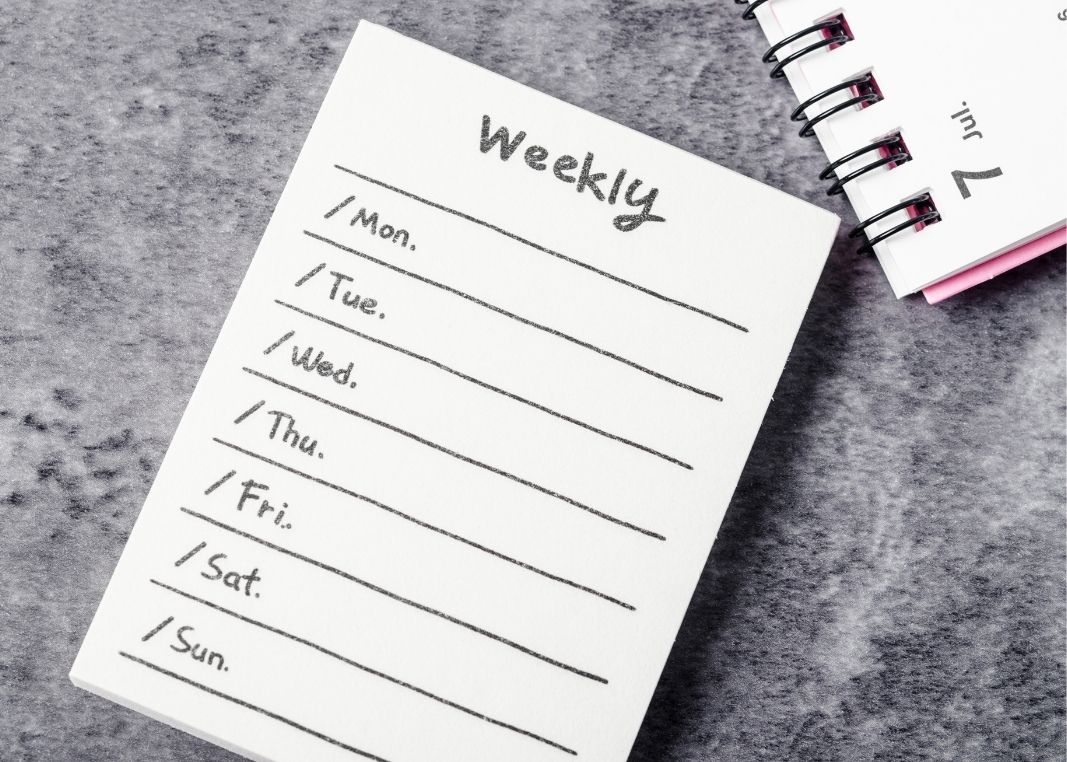
This is an essay about that shift.
About living in a world that moves too fast, and seeking a slower one within yourself.
About writing as a way of returning.
About weekly rhythms, rituals, nourishment, and clarity.
About how the Weekly Duo was designed not to perfect your life — but to hold it softly.
Living in a Digital World That Moves Faster Than the Body Can Feel
Before we talk about writing or ritual or planning, we need to talk about the world we’re all actually living in: a digital world moving at a speed our bodies cannot match.
Technology has made us efficient, but also fragmented. Connected, but overstimulated. Informed, but rarely grounded.
The Pace of Screens
Your phone doesn’t know when you’re tired. Your calendar doesn’t slow down when your body asks for rest. Your apps don’t soften just because you’re overwhelmed. Screens have only one speed — fast.
Your body has many — slow, tender, cyclical, fluctuating. This mismatch creates silent emotional strain. You feel like you’re always trying to keep up with something that never pauses for you.
Digital Tools Help — But Only With Half the Story
Where Digital Helps
- fast capturing
- automated reminders
- syncing schedules
- work coordination
- never losing notes
Digital tools are brilliant for logistics.
They hold information well. Sometime too well.
Where Digital Hurts
- too many lists, too many reminders
- the mind never gets a resting point
- notifications scatter attention
- multitasking becomes the default
- too many distractions from tasks at hand
- nothing feels emotionally integrated

Digital tools hold information,
but they do not hold you.
Where Writing Complements Digital
- writing slows the pace
- writing brings the mind back into the body
- writing gives thoughts a home
- writing creates emotional context
- writing provides a pause
A study from the University of Tokyo in 2023 found that handwriting activates deeper memory and emotional-processing regions compared to typing — it triggers our “motivation and reward” neurotransmitter – Dopamine when the brain engages with each word more deeply, as opposed to with typing. This finding explains why writing often feels like relief, clarity and grounding.
This is the gap we’ve been missing. We’re not failing at planning. We’re just planning at the wrong speed. And that’s where writing steps in.
Writing as a Return to Yourself
Something shifts the moment pen touches paper. It’s small, almost invisible, but you feel it: a slowing, a softening, a settling-down of the inner world. Writing is one of the few remaining analogue rituals in a digitised life — and that’s precisely why it feels so grounding.
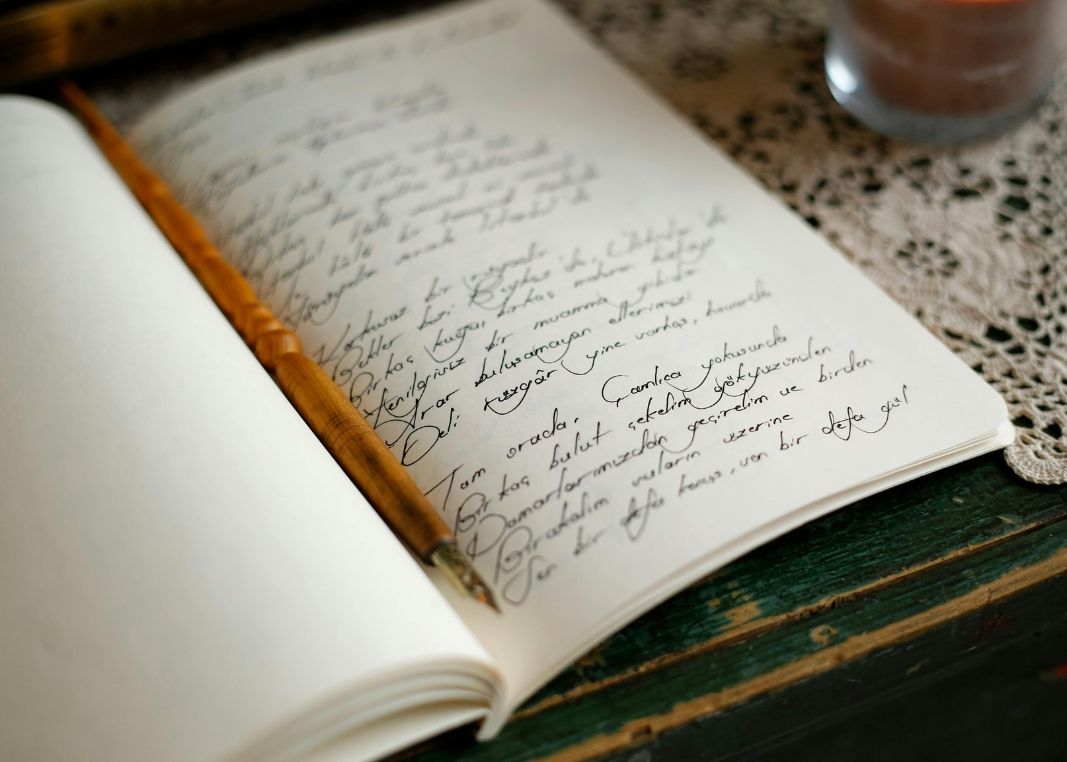
Writing doesn’t demand performance. It asks for presence. When you write:
You slow down enough to hear yourself.
Typing keeps up with your racing thoughts.
Writing forces them to move at the pace of your hand.
This slowing is not inefficiency — it is clarity.
You filter instead of dumping.
Writing makes you choose what matters.
It draws out the essentials and lets the rest fade away.
You regulate your emotions.
The repetitive motion of writing is somatic — the body participates, not just the mind.
Your nervous system interprets it as safety.
You create psychological containment.
Thoughts that feel heavy inside the mind feel lighter on paper.
You see them, hold them, understand them.
You don’t need to write every day.
This is the quiet truth that most planning systems ignore. Daily writing is unrealistic for most humans. Weekly writing is not only easier — it’s more effective.
Even a single writing ritual once a week can anchor you. Even a few lines can change the emotional texture of the week. Even a small sketch of the week gives your mind a map.
Writing is not about neatness. It’s not about filling pages. It’s not about productivity. Writing is about meeting yourself gently, honestly, quietly.
And when writing meets weekly planning, things begins to align.
Weekly Rhythms & Weekly Rituals — How Humans Naturally Move
Humans are not daily creatures. We are weekly ones.
Our bodies, moods, hormones, focus, digestion, and energy all operate in weekly arcs. Cultures around the world, for centuries, have built life around a seven-day rhythm — not out of randomness, but because it works.
Weekly Rhythm Pattern (Emotional + Biological)
- Monday: rise, structure, clarity
- Tuesday: peak focus
- Wednesday: predictable dip
- Thursday: recovery and momentum
- Friday: softening, emotional unwinding
- Saturday: decompression
- Sunday: reflection, closure, reset
Daily planning ignores this rhythm. Weekly planning works with it. Weekly planning doesn’t ask for daily consistency. It asks for weekly presence.
Weekly Rituals — The Gentle Anchors
Rituals are the softer cousins of routines. Routines demand; rituals invite. Rituals don’t collapse if you skip a day. They wait patiently for your return.
Rituals that fit the weekly rhythm:
- A weekend reset
- A Monday tone-setting moment
- A Wednesday pause to listen to your body
- A Friday reflection
- A single slow meal cooked with intention
- A tiny gratitude note added midweek
- A few lines written about how the week feels
Weekly rituals create emotional bookmarks in time. They shape the week gently, without force. And because weekly planning only requires one or two check-ins, you don’t feel like planning is chasing you. You feel like you’re returning to something that already knows you.
Week-at-a-Glance — The Psychological Release
There is an immediate relief that comes from seeing your entire week on one page. It’s subtle, but powerful — a moment where the mind exhales.
When the week is visible as a whole:
Stress becomes measurable.
A task doesn’t feel enormous when you can place it somewhere in the week.
Perspective replaces panic.
You realise you don’t need to do everything today. Some things can move gently to tomorrow or Friday.
Patterns emerge.
You notice energy cycles, emotional dips, and days you naturally crave rest.
Flexibility feels possible.
Instead of feeling you’ve “failed a day,” you adjust the week.
You gain emotional space.
A week is wide enough to hold real life. A day is too narrow. The week at a glance becomes a map — one that doesn’t pressure, but quietly guides.
This is why weekly planning feels like a release. It gives your mind the overview it has been trying to piece together internally. You don’t need to hold everything in your head anymore.
The paper holds it for you.
Meal Planning — Mindful Eating, Mindful Cooking, Family Time
Food might seem like a small part of planning, but it carries an enormous emotional load.
Every day, without realising, we ask ourselves:
“What should I cook today?”
“Do I have ingredients?”
“Will this be nutritious enough?”
“Should we order in?”
“Do I have energy to cook?”
These micro-decisions pile up into mental fatigue. Weekly meal planning dissolves this pressure.It gives evenings a slower, gentler shape.
Mindful Eating
Planning meals weekly helps you tune into what your body needs — grounding meals during stressful weeks, lighter meals during warm weeks, comforting meals on emotional days.
Mindful Cooking
Cooking slowly once or twice a week becomes a ritual — a sensory experience that anchors you. The sound of chopping, the warmth of a simmering pot, the smell of spices — these are not chores; they’re grounding cues.
Family Time
A predictable meal rhythm brings calm to the household. It opens up moments for conversation, shared dinners, and slower evenings. Weekly meal planning isn’t about being organised. It’s about nourishment — physical, emotional, relational.
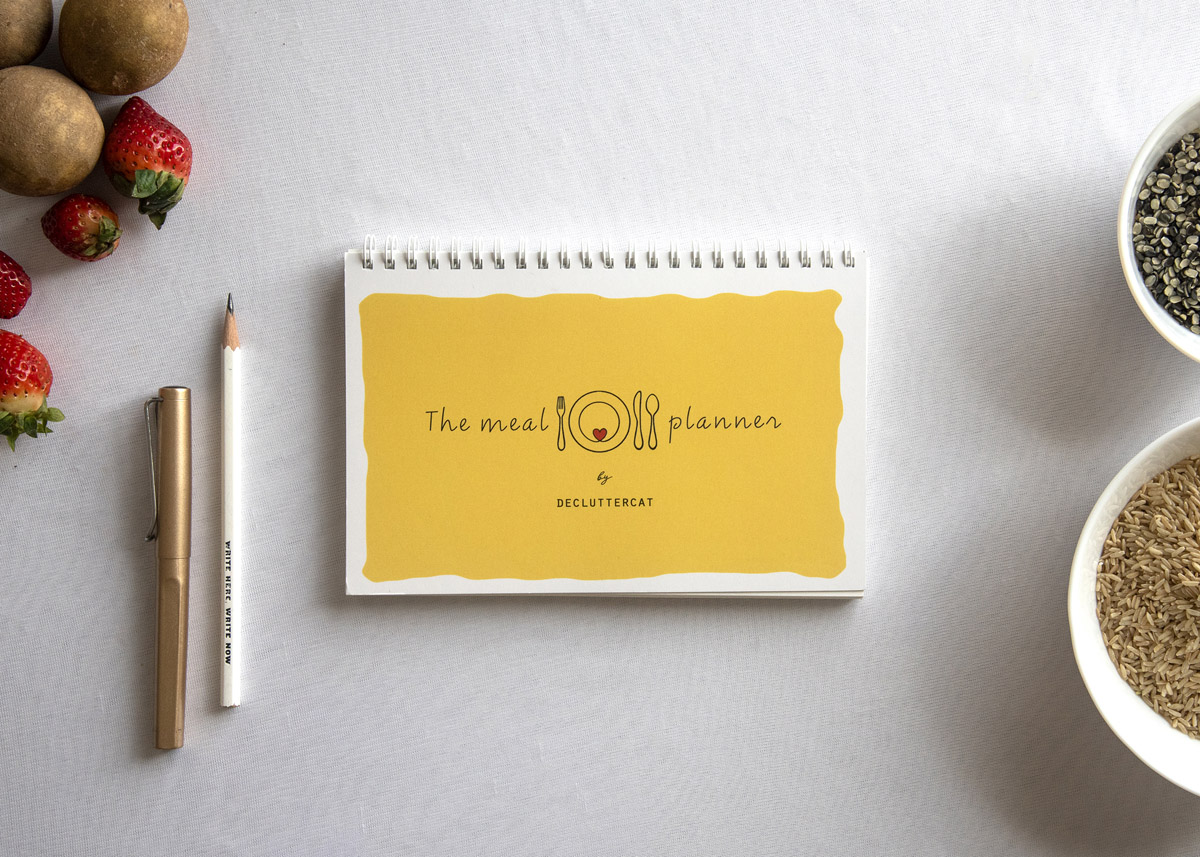 This is where the Weekly Duo becomes more than a planner.
It becomes an ecosystem of calm.
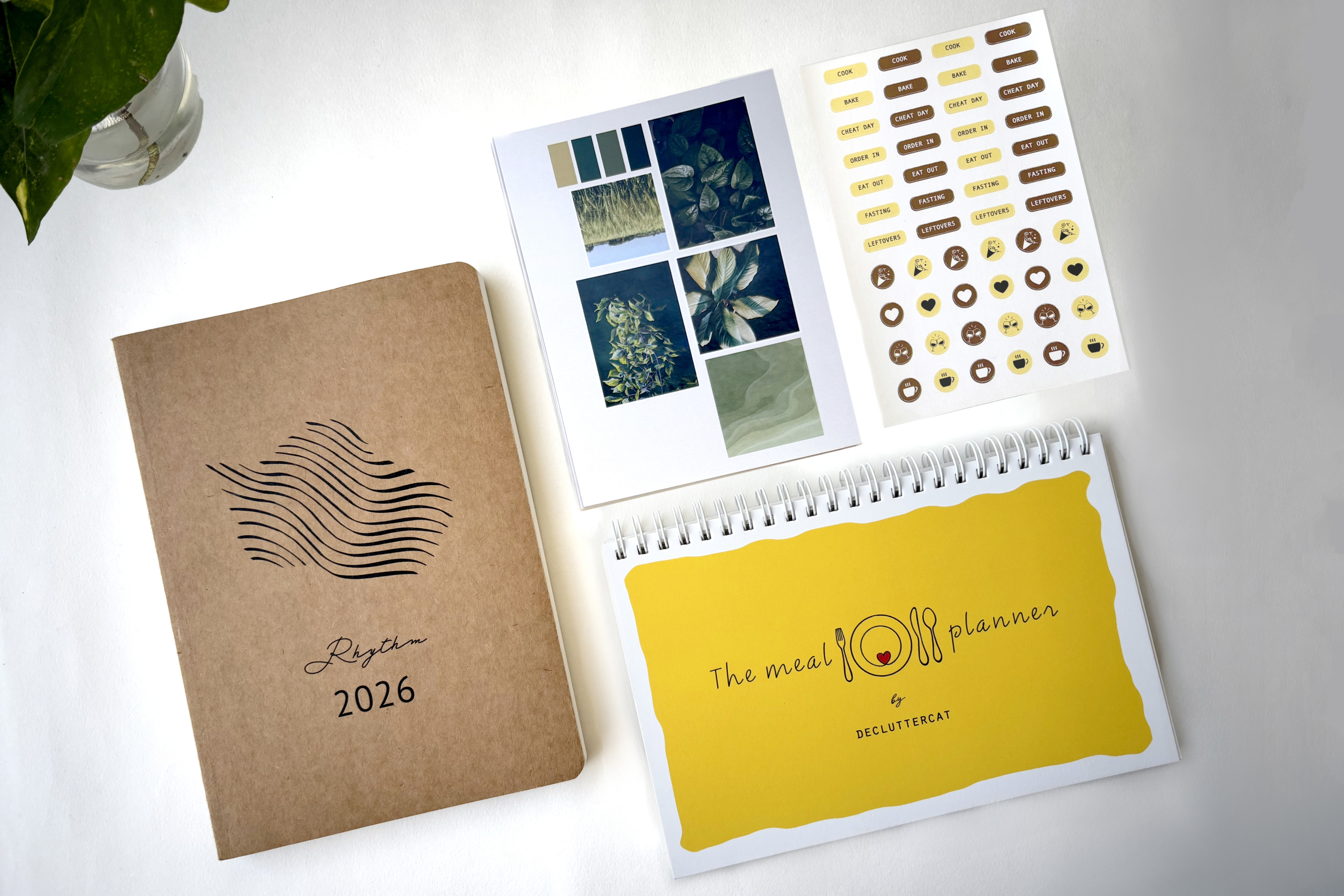
The Weekly Duo — Gentle Planning for Real Humans
The Weekly Duo wasn’t made for perfectionists. It was made for people with real lives — fluctuating energy, shifting schedules, unpredictable moods, and deeply human weeks.
It has two parts, each holding a different yet synchronous kind of calm.
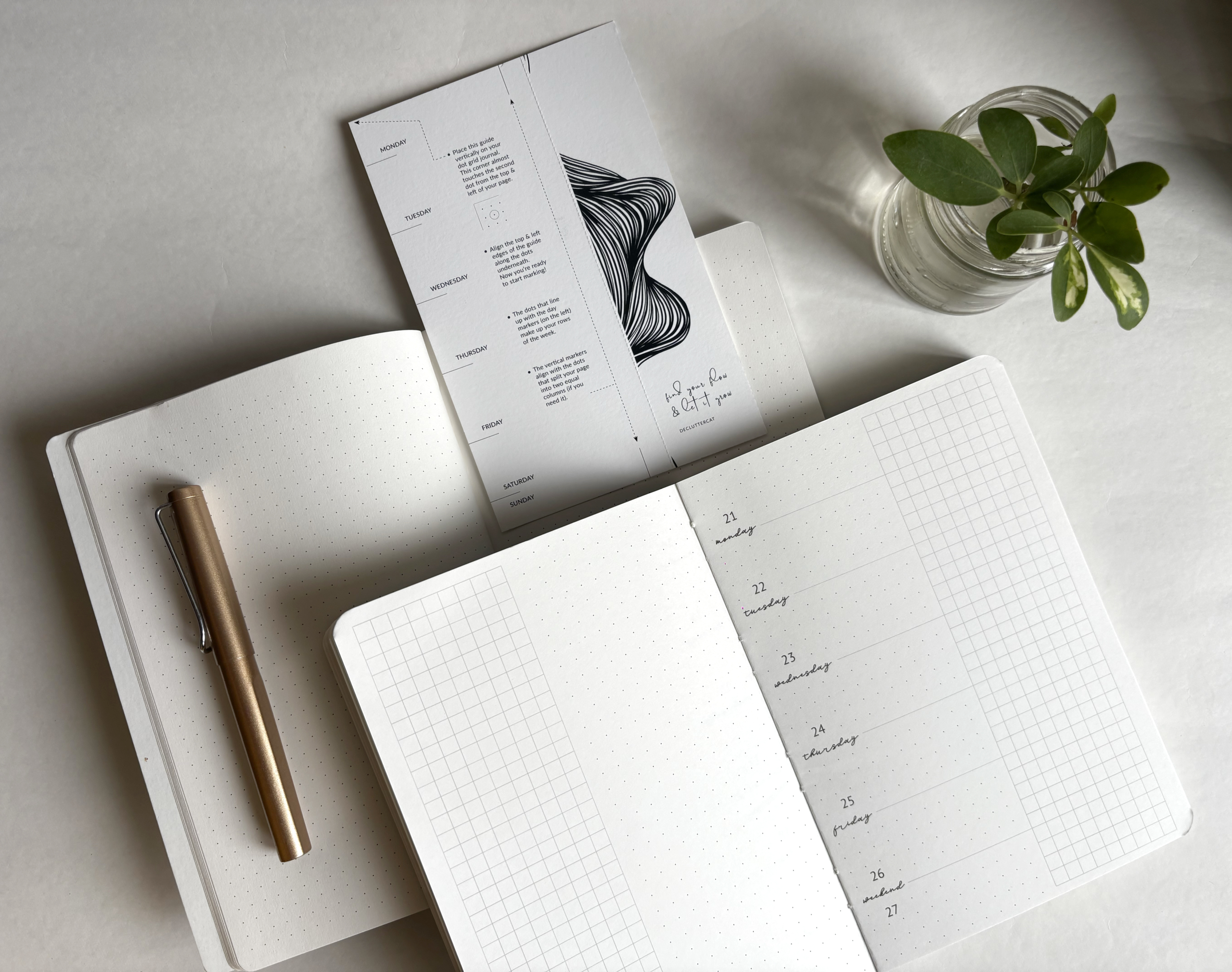
1. The Weekly Planner — Spacious, Breathable, Forgiving
When you open the Weekly Planner, the first thing you notice is space. Not structure. Not pressure. Space.
The weekly layout:
- invites free writing
- lets you see your week at a glance
- offers emotional clarity
- holds both tasks and feelings
- welcomes skipped weeks
- adapts to your rhythm
- offers structure without demand
- supports rituals gently
There is no pressure to fill daily boxes. There is no guilt if you don’t fill every day. There is no expectation of perfection. The Weekly Planner meets you where you are —
on rushed weeks, calm weeks, messy weeks, beautiful weeks.
2. The Meal Planner — Rhythm, Nourishment, Ease
The Meal Planner holds one of the heaviest emotional loads of the week — food.
It gives your mind:
- relief from daily decisions
- clarity about grocery needs
- calmer evenings
- mindful cooking moments
- a sense of nourishment
- family rituals
- a predictable flow
The two weekly spreads together, create a unified rhythm: your week, both practical and emotional, held in one place. The Duo doesn’t ask for discipline. It offers a place to return. It doesn’t demand daily consistency. It invites weekly presence. It doesn’t expect perfection. It celebrates sincerity.
Planning becomes a kindness, not a chore.
Your Week on Paper Becomes a Week That Holds You
In a world that moves too fast,
writing slows you down.
Weekly rhythms steady you.
Rituals anchor you.
Meal planning nourishes you.
The Weekly Duo supports you.
Weekly planning lasts because it doesn’t expect daily perfection.
It understands your humanity. When your week sits on paper — gently, spaciously, honestly — something inside you softens. Your days stop feeling like tasks to complete and start feeling like moments to inhabit.
You begin returning to yourself each week. Not to be productive — but to feel held. And once you taste that calm, that clarity, that rhythm — you don’t go back. Your week on paper becomes a companion. A quiet witness. A soft structure. A breathing space. A place where your life feels seen — and where you feel held in return.