


Not All Weeks Deserve The Same Energy – A Gentler Approach to Weekly and Daily Planning
Why We Expect Consistency — And Why That Can Fail
We live inside systems that reward consistency.
Consistent habits.
Consistent energy.
Consistent routines.
Consistent output.
Modern work culture is built around predictability — performance reviews, weekly targets, productivity frameworks, even wellness advice often assume that what worked yesterday should work again tomorrow. Consistency is framed as discipline. As commitment. As success. And so, without realising it, we begin to expect the same from ourselves.
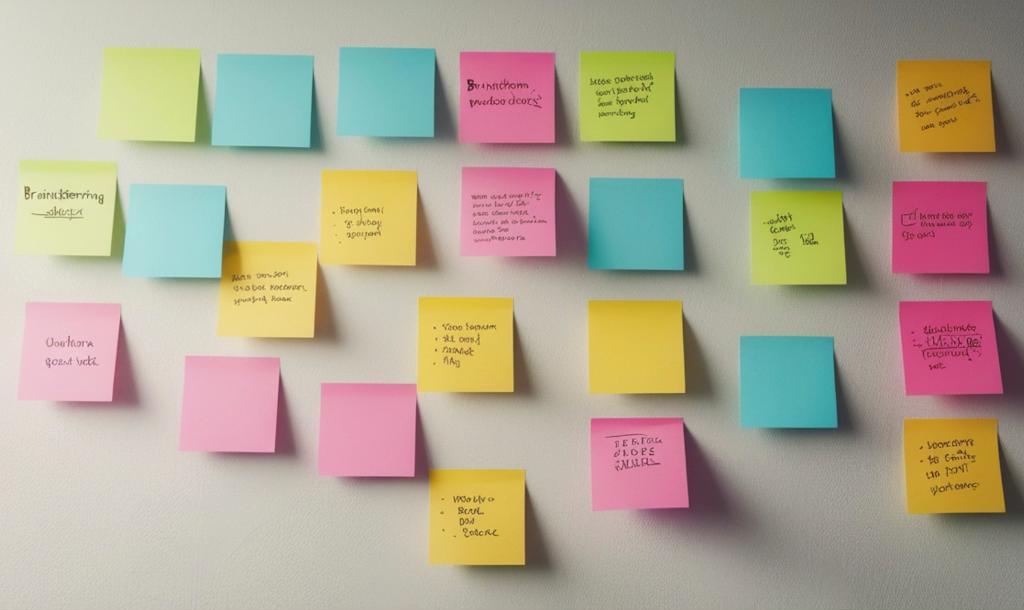
We expect our weeks to carry similar momentum.
We expect our days to hold the same capacity.
We expect our minds to show up with equal clarity — regardless of what’s happening in and around us.
But human energy doesn’t work that way. Cognitive load fluctuates. Emotional labour accumulates. Decision fatigue builds quietly, especially when much of our work — paid or unpaid — involves anticipating needs, managing transitions, and holding space for others.
Some days begin even before they begin. Some weeks feel already full before Monday arrives. Sometimes plans are made around other people’s rhythms, not our own. And yet, planning systems rarely account for all this. They assume an even baseline — the same attention, the same focus, the same capacity — week after week. When that assumption doesn’t hold, the disconnect doesn’t feel structural. It feels personal.
We tell ourselves we’re inconsistent.
Undisciplined.
Out of rhythm.
What often gets overlooked is that fluctuation is not a failure of commitment — it’s a reality of being human. Mental health research consistently points to the impact of sustained cognitive and emotional load on focus, memory, and executive function. Our ability to plan, prioritise, and follow through is deeply influenced by stress levels, sleep quality, emotional strain, and the invisible work we carry.
Expecting consistent output from inconsistent conditions isn’t motivating — it’s exhausting. And when planning systems mirror these expectations too closely, they can quietly amplify that exhaustion instead of easing it.
Not All Weeks Are Built the Same
Even when calendars look similar, weeks carry very different kinds of weight.
Some weeks are output-heavy — full of deadlines, meetings, and visible work.
Some are heavy to hold — emotionally demanding, decision-dense, or mentally crowded.
Some are logistically busy but emotionally light.
Others are quiet on paper but heavy beneath the surface.

Time availability and capacity are not the same thing. You might technically “have time in a week — fewer meetings, open slots, empty boxes — and still feel stretched thin. Emotional processing, caregiving, coordination, worry, and anticipation all draw from the same internal reserves that planning and focus require. Energy doesn’t distribute evenly across days too. A mid-week slump. A slow Monday that never quite lifts. A Friday that carries the emotional residue of everything before it.
When planning systems assume that every day deserves the same structure, the same ambition, the same intensity, they miss this fundamental truth:
Weeks are uneven by nature.
Some weeks benefit from clarity and detail.
Others benefit from looseness and restraint.
Some need structure to contain them.
Others need space so they don’t collapse under their own weight.
The issue isn’t that we don’t know how to plan. It’s that we’re often planning the wrong way for the week we’re actually in. When planning ignores variability, it stops feeling supportive. It begins to feel like something else to manage — another layer of expectation placed on an already full internal landscape.
When Fixed Planning Systems Quietly Create Friction
Most people don’t abandon planners because they stop caring. They abandon them because something begins to feel off.
Fixed planning systems — especially those built around strict identical layouts — work beautifully when life cooperates. They provide clarity, rhythm, and reassurance. In steady seasons, they can feel grounding.
But over time, as our energies fluctuate and weekly rhythms change, that same structure can start to feel rigid and create friction.
Unfilled boxes stand out.
Missed days become visible gaps.
Pages quietly record what didn’t happen, not what did.

The planner becomes a mirror — and not a kind one.
When every week looks the same on paper, real-life disruption feels like deviation instead of inevitability. When structure doesn’t flex, responsibility shifts inward. The system remains neutral. The user feels at fault. This is how planning guilt develops. It’s not loud — it’s quiet.
The kind that makes you avoid the planner.
The kind that makes you skip instead of returning.
The kind that slowly turns a supportive tool into a reminder of pressure.
Eventually, many people conclude that planning itself doesn’t work for them. But often, what’s failing isn’t planning — it’s the assumption of sameness baked into the system. A planning structure that doesn’t acknowledge fluctuating energy, emotional load, and changing seasons of life will always ask more than it gives in the long run.
When planning begins to supervise instead of support, disengagement isn’t a lack of discipline. It’s self-preservation.
Gentle Structure: What Flexible Weekly Planning Actually Looks Like
When rigid planning systems stop working, the instinct is often to swing to the other extreme.
To stop planning altogether.
To keep everything in the head and hope for the best.
But gentle structure isn’t the absence of planning. It’s a different relationship with it. Flexible weekly planning still offers direction — it just doesn’t demand certainty.
Instead of treating the week as something that needs to be fully mapped before it begins, gentle structure allows the week to unfold in conversation with you. It recognises that clarity often arrives during the week, not before it.
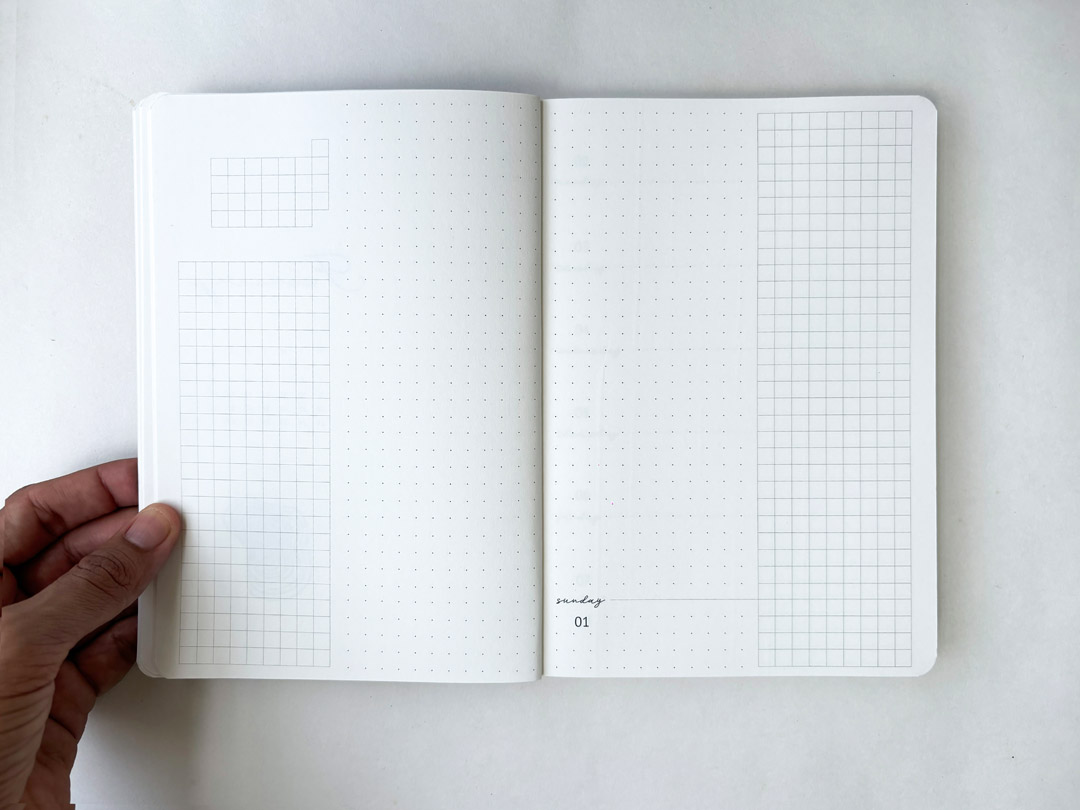
One of the most supportive ways this shows up is through the idea of anchor days. An anchor day isn’t about productivity or output. It isn’t a reset packed with tasks. And it isn’t something that needs to look impressive. It is simply a stable point in the week — a day you return to consistently, regardless of how the rest of the week behaves. For some, it’s a slow Monday morning. For others, a mid-week check-in. For many, a quiet Sunday rest.
The purpose of an anchor day isn’t to plan everything. It’s to orient yourself.
On an anchor day, you might:
- glance at the week ahead without filling every detail
- identify one or two priorities worth protecting
- notice how your energy feels before making decisions
- revisit intentions rather than rewrite plans
This small act of returning — week after week — creates continuity without rigidity. Anchor days work because they don’t assume the rest of the week will cooperate. They acknowledge that plans may scatter, energy may dip, and unexpected things may enter. The anchor isn’t there to control the week — it’s there to steady you within it.
Gentle structure often looks like this:
- one anchor day instead of seven perfectly planned days
- a few loose priorities instead of full schedules
- space left intentionally unfinished
Rather than asking, “How do I fit everything in?”, the question shifts to: “What does this week actually need from me?” This approach also removes the pressure to plan “correctly.” If you miss a day, the system doesn’t collapse. If plans change, there’s room to adapt. If energy fluctuates, the structure still holds.
Anchor days give you a rhythm without demanding consistency. They create a place to come back to — not something to keep up with. And over time, this kind of weekly planning begins to feel less like organisation and more like orientation. You’re not managing the week. You’re meeting it – again and again – from a place of steadiness.
How a Dot Grid Journal Supports Planning That Moves with You
When planning is allowed to be flexible, the tool you use begins to matter in a different way. Not because it promises productivity. Not because it optimises time. But because it either respects movement — or resists it.
Many traditional planners arrive with decisions already made for you. Where the week begins. How much space each day deserves. What consistency should look like.
A dot grid journal does something quieter. It offers guidance without instruction. The dots are present, but they don’t tell you what to do with them. They allow alignment without enforcing boxes. They’re visible when you want structure and almost invisible when you don’t. This is what makes a dot grid journal especially supportive for weekly planning that moves.

The dot grid journal by Decluttercat comes with a grid guide which is specially designed to match the dots in this journal to transform simple pages into a weekly planner spread when you need it.
On weeks where clarity feels helpful, the dots can hold:
- a lightly drawn weekly layout
- space for anchor priorities
- gentle divisions that give the week shape
On weeks where energy feels fragile or scattered, the same pages can become:
- a single list
- a few notes gathered without hierarchy
- a largely open spread that simply holds your thoughts
Nothing needs to be consistent from one week to the next — because the journal isn’t asking for consistency. It gives you room to respond rather than perform. The grid guide is a simple tool can sketch out the week loosely, knowing that what you draw isn’t permanent. If the week shifts — as it often does — the structure can shift with it.
A dot grid journal also lowers visual pressure. There are no pre-labelled sections waiting to be filled. No identical boxes reminding you of what didn’t happen. No empty dates carrying quiet judgement. What remains is the page you’re on — exactly as it is. This matters more than we often realise.
When planning tools remove visual cues of “falling behind,” it becomes easier to return to them. Planning stops being about maintaining momentum and starts becoming about maintaining connection — to the week, to yourself, to what actually feels possible.
Over time, this kind of weekly planning builds awareness.
You begin to notice:
- what needs more structure
- what need restraint
- how your energy tends to move
- which anchor days steady you the most
Your planning style emerges not because you followed a system, but because you paid attention. To your own rhythm. And the dot grid journal becomes a gentle planner and a container — one that adapts quietly, week after week, without asking you to prove anything in return.
White Space as a Planning Tool (Not an Absence)
In many planning systems, white space is treated as a problem.
When a week is tightly packed on paper, even small disruptions feel destabilising. One meeting runs over and the entire plan begins to unravel. An empty section feels unfinished. A blank day looks like something was missed. Space is seen as something waiting to be filled. But when space is built into the system, the week can shift without collapsing. In gentle planning, white space is not an accident. It’s a design choice.
White space is what allows plans to bend without breaking.
It absorbs interruptions.
It softens transitions.
It gives the week room to change shape.

White space also reduces emotional pressure.It removes the visual demand to perform consistently. It creates permission to pause without falling behind. It acknowledges that not everything needs to be decided upfront.
In a dot grid journal, white space becomes functional. It’s where unscheduled conversations land. Where energy dips are allowed without explanation. Where rest doesn’t need justification. This kind of space is especially important during weeks that are emotionally heavy or mentally crowded. When capacity is limited, a sparse page can feel far more supportive than a detailed plan.
White space doesn’t mean nothing is happening. It means the system is holding more than it’s asking. Over time, this reframing changes how planning feels. You stop measuring weeks by how full the page looks. You stop interpreting space as failure. You begin to see openness as part of the structure — not a lack of it.
And planning starts to feel kinder.
When the Week Holds, but the Day Needs Care
Even with a flexible weekly plan, some days still ask for more. More containment. More gentleness. More space to land. These are the days when the week, as a whole, still makes sense — but the day itself feels overwhelming. Thoughts loop. Emotions sit closer to the surface. Focus fragments.
This is where daily planning enters — not as a requirement, but as support.
Daily planning, in its gentlest form, is not about productivity or efficiency. It’s about presence. It’s a place to hold one day at a time. A way to slow the mind onto paper. A pause that says, “Let’s just be here.”
This is the philosophy behind Breathe.

Breathe isn’t meant to be used every day.
It isn’t dated.
It isn’t something to keep up with.
It exists for the days that need care — the ones that exceed what weekly planning can comfortably hold. On those days, Breathe offers:
- grounding text that lowers pressure
- open, minimal layouts that don’t rush thinking
- circular motifs that invite pause rather than progress
- multiple grids for different kinds of processing
You might use it to:
- untangle thoughts
- plan gently without timelines
- hold emotions alongside tasks
- name what the day is asking for — and what it isn’t
Importantly, daily planning here is optional. There is no expectation to return tomorrow.
No guilt attached to unused pages. No sense of falling behind. Breathe is not a habit to maintain. It’s a place to arrive when needed.
And when a heavy day is held gently, it stops spilling into the rest of the week. The act of giving the day its own space protects the week’s overall rhythm. Daily depth doesn’t disrupt weekly planning. It supports it.
Zooming In and Out: Planning as a Living System
When weekly planning is flexible and daily planning is available as care, planning becomes something else entirely. It becomes a living system.
You zoom out when you need perspective. You zoom in when you need containment. You return to anchor days when you need steadiness. You allow white space when you need rest. Nothing here is fixed. Nothing is demanded. Nothing needs to look the same from one week to the next.
This kind of planning trusts fluctuation. It understands that energy moves, that capacity changes, that life doesn’t unfold in neat, repeatable patterns. Not all weeks deserve the same energy. Not all days need the same support.

And planning doesn’t need to correct that. It can honour it.
Sometimes, the most supportive thing you can do for a week is give it a light structure. Sometimes, the most supportive thing you can do for a day is give it room to breathe. And when planning meets you there — gently, quietly, without judgement — it stops being something you try to maintain. It becomes something you return to.
Again and again.