


Goals, Gratitude & Beginning Gently — Setting the mood for a new year
Anchors, Beginnings & Why December Matters
There is something deeply human about beginnings.
We mark them instinctively — sometimes loudly, sometimes quietly — because they give shape to time. Mondays, new months, new years. The first page of a notebook. The first line written after a long pause.
These moments are not random. They are anchors. They give us permission to stop drifting and say, “Here, this is where I begin again.”
Mondays matter because they reset the cadence of our weeks.
New years matter because they give us a collective pause — a moment when everyone seems to inhale at the same time.
And December matters because it sits right in between.
December doesn’t rush us forward. It asks us to look back.
The light softens. The evenings stretch. Conversations slow down in ways we don’t even consciously register. We begin to notice the year — not just what we accomplished, but what we endured, adapted to, and quietly survived. It is the perfect time to reflect on our small wins – the moments we showed up.

There is a reflective quality to December that no other month quite holds. It is not the end, but it is not the beginning either. It is the threshold. And thresholds are powerful places to stand.
This is why December feels like the right time to talk about goals and gratitude together — not as tasks to complete, but as moods to settle into. Before the declarations. Before the planners are filled. Before the urgency of January arrives.
This blog is a read into honouring fresh starts. There is a reason Mondays feel different. There is a reason January carries weight.
But before we rush into becoming something new, there is value in pausing long enough to ask:
What kind of year do I want to step into?
What kind of rhythm do I want to carry forward?
Goal Setting Without the Drama
By the time December arrives, goal setting tends to arrive with noise.
Resolutions are announced with certainty. Plans are drafted with optimism. There’s an unspoken expectation that goals should be bold, visible, and transformative.
And yet, quietly, many of us are tired.
Tired of fixing ourselves.
Tired of starting over aggressively.
Tired of goals that sound good but don’t quite fit the shape of our days.
This isn’t because ambition is wrong. It’s because ambition often forgets to account for reality.
Resolutions become dramatic when they assume unlimited energy, uninterrupted time, and a future version of us who never falters. They leave little room for fluctuation, fatigue, or change.
But most lives are built in the in-between.
Real goal setting doesn’t shout. It whispers.
It sounds like:
- I want my mornings to feel calmer.
- I want to eat with a little more intention.
- I want fewer decisions weighing on me every day.
- I want to protect my energy instead of constantly spending it.
These goals don’t announce themselves loudly, but they are deeply meaningful. They grow out of lived experience rather than idealised futures.
The shift happens when we stop asking, “What should I achieve?” and start asking, “What would genuinely support me?”

This is where writing becomes important. A goal that stays in your head remains unfinished. It floats, it changes shape, it competes with every other thought. Writing it down gives it weight — not pressure, but presence. Once it is written, it no longer needs to be rehearsed constantly. It sits there, patiently, waiting for you to return to it.
Written goals become gentler companions. They remind rather than demand.
Writing It Down: Making Intentions Tangible
There is something grounding about the physical act of writing.
Not typing. Not scrolling. Writing.
The resistance of paper. The pace of the hand. The small pause between thought and movement. Writing slows the mind just enough for clarity to appear. It doesn’t require eloquence. It doesn’t require commitment. It simply requires presence. When you write something down, you are acknowledging it. You are saying, this matters enough to give it space. And that is everything. Planning on paper, trumps digital tools even today, it’s true. Read more about that here.
Thoughts that feel overwhelming in your head often soften once they are written. Intentions that felt vague begin to take shape. Even worries become easier to hold when they are placed somewhere outside of you.
This kind of writing doesn’t need consistency to be effective. It doesn’t need daily entries or filled pages. It just needs honesty.

Messy writing counts.
Unfinished writing counts.
Writing that doesn’t make sense yet counts.
Messy or neat, in all its glory — once it’s written, it becomes personal.
And personal is what makes intention sustainable.
From Vision Boards to Vision Journals
For many people, vision boards feel aspirational but inaccessible.
They come with an expectation of creativity, materials, time, and aesthetic coherence. They ask us to visualise a future that sometimes feels too far away to picture clearly.
Vision journaling offers another way. It is quieter. More forgiving. More adaptable. Vision journaling is not about visual perfection. It is about giving ideas somewhere to land. It allows intention to emerge gradually, without pressure.
A vision journal might look like a page with:
- a single word written at the top
- a few scattered thoughts
- a piece of paper taped in slightly crooked
- a sticker placed without intention
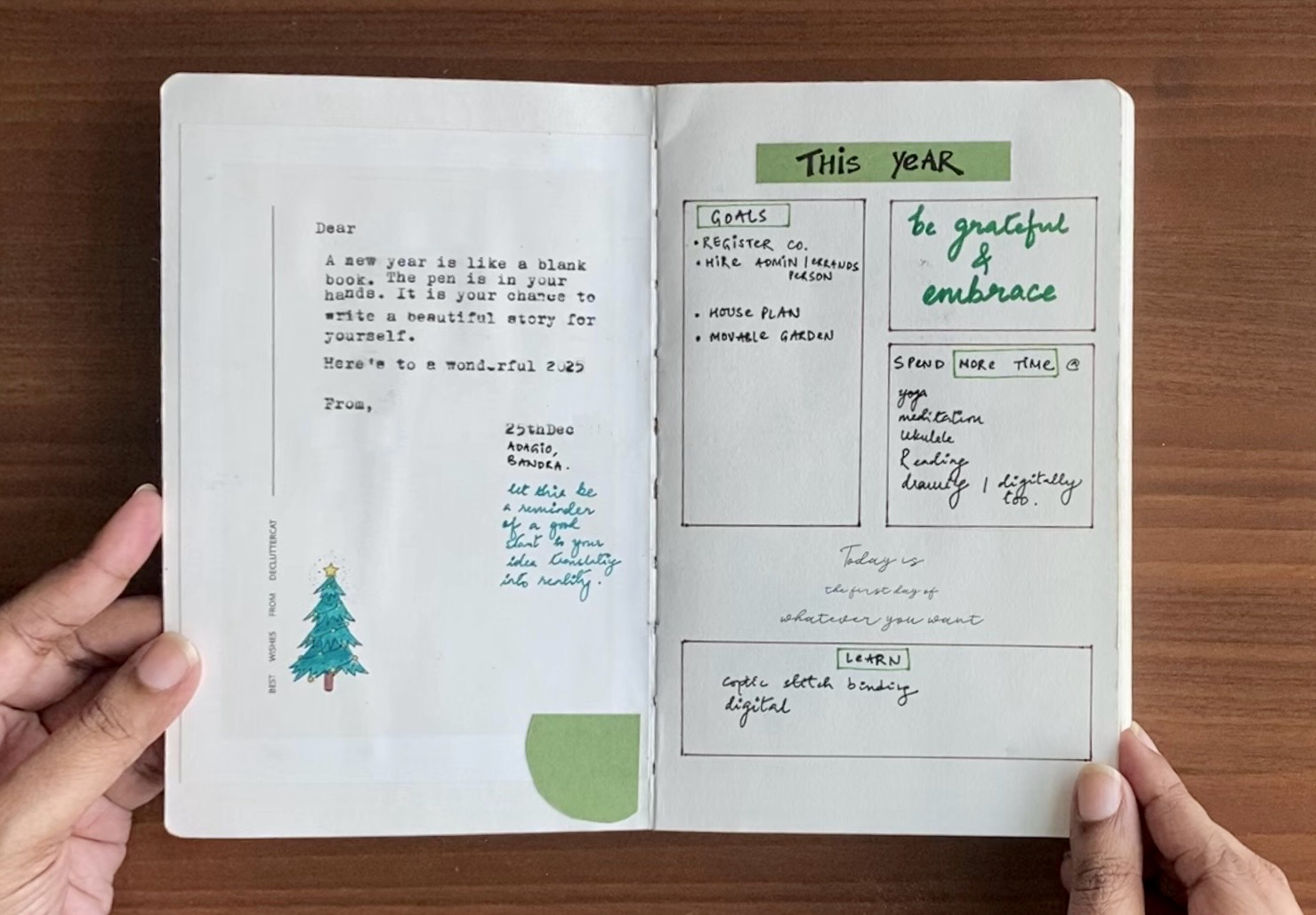
It might look unfinished. It might stay unfinished. That’s allowed.
Some gentle ways to approach vision journaling:
1. Start with a pencil so nothing feels final.
2. Use scraps of paper, notes, receipts — things already in your life.
3. Write words – if images feel intimidating.
4. Let pages evolve slowly, revisited over weeks rather than completed in one sitting.
Vision journaling is about permission.Permission to explore without deciding.
Permission to write without committing.
Permission to see what emerges when you stop trying to control the outcome.
Space, Slowness & Mental Clarity
Clarity rarely arrives when we are rushing.
It appears in pauses. In empty margins. In moments where nothing is demanded of us.
Space — both mental and physical — creates the conditions for understanding.
When our days are crowded, our minds follow suit. Thoughts pile up. Decisions feel heavier. Gratitude gets buried under urgency.
Space interrupts that.
Space on a page allows thoughts to breathe.
Space in a planner makes room for reflection.
Space in a week invites honesty.
This is why white space matters so much. It is The Pause That Brings Life into Focus.

Not as a design choice, but as a psychological one. When every inch is filled, we feel compelled to perform. When there is room left blank, we feel allowed to pause.
In that pause, we notice more.
We notice what feels too much.
We notice what feels nourishing.
We notice what we’ve been carrying without realising.
And often, it is in this space that gratitude quietly surfaces.
Weekly Planning as a Natural Rhythm
If there is one unit of time that truly fits human life, it is the week.
Not the flawless day.
Not the distant year.
The week.
Our bodies respond to it. Our energy fluctuates within it. Our routines reset through it. Weekly planning works because it aligns with this natural rhythm. It doesn’t require daily perfection. It allows inconsistency without punishment. It offers structure without rigidity.
Life doesn’t separate itself neatly into categories. When you can see your week at a glance, your mind stops holding everything at once. Plans no longer compete for attention. The mental noise softens. Weekly planning also respects reality. Some days you will write more. Some days you won’t write at all. The week holds both. This rhythm — rise, dip, reset — mirrors how life actually unfolds.
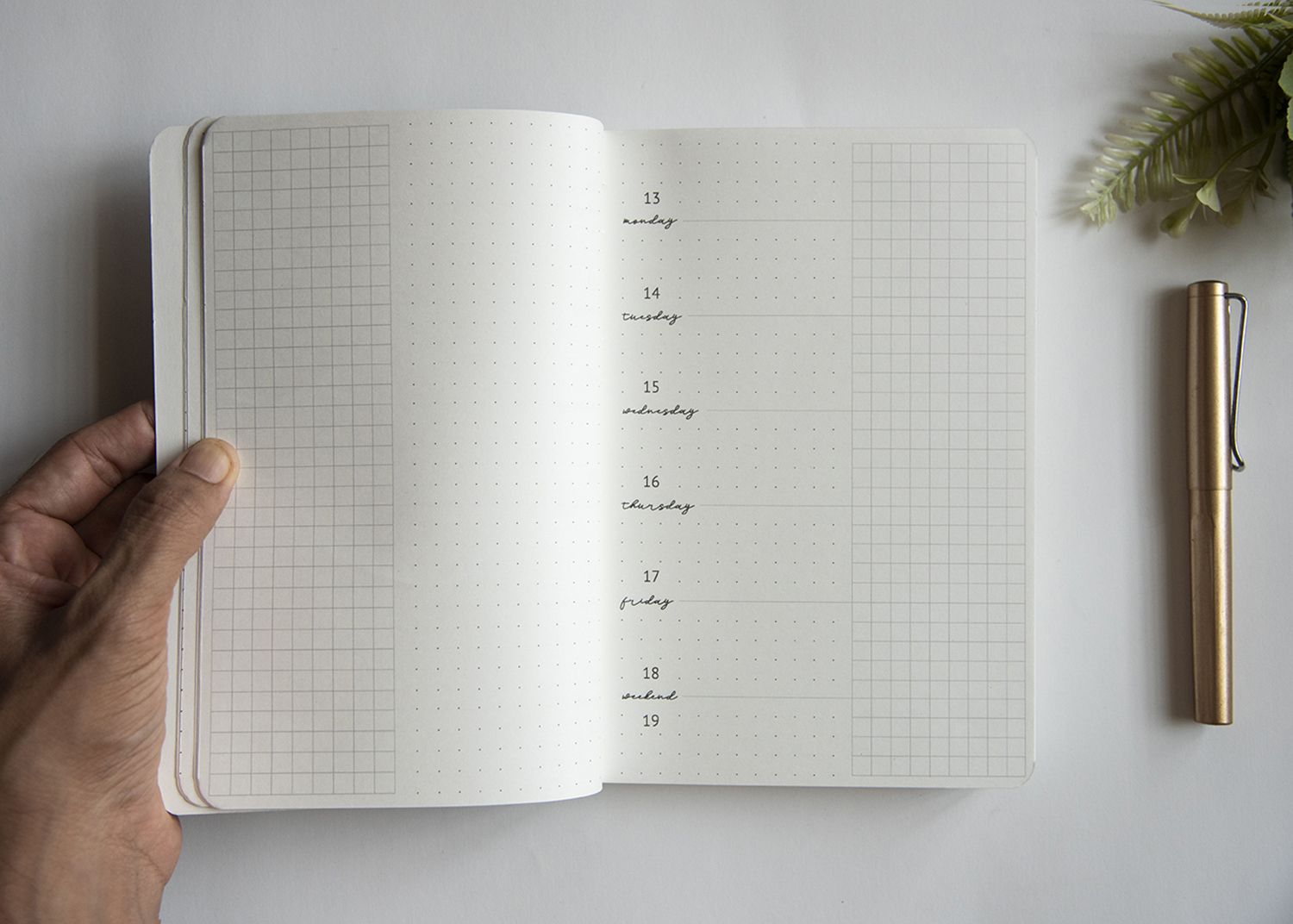
And that is why weekly planning lasts.
Meals affect energy.
Energy affects mood.
Mood affects motivation.
When meals are lightly planned, the week feels steadier. Decisions reduce. Evenings soften. The part of the day that tends to feel most chaotic — food — becomes a source of calm instead of stress.
And during the festive season, this becomes especially important.
December, with its gatherings and celebrations, often bends our usual routines. There are unexpected dinners, potluck plans, guests who stay longer than expected, and meals that stretch across the whole afternoon. In a month that’s already thick with emotional and social weight, food — which feeds our bodies and binds our memories — can easily become a source of stress if it’s left to chance.
If you’d like more inspiration around this, there’s a full guide that explores mindful meal planning in a calm, practical way — how to plan with intention, eat with awareness, and feed your weeks in ways that feel nurturing especially in this festive, reflective season.
This isn’t about perfect menus. It’s about nourishment that supports your week and your wellbeing — especially in this festive, reflective season. This isn’t about perfect menus. It’s about nourishment that supports your week and your wellbeing — especially in this festive, reflective season. This is where a weekly planning system becomes less about productivity and more about support.
It holds life as it is — unfinished, evolving, human.
Gratitude: Noticing How Far You’ve Come
December invites us to look back.
Not intentionally — instinctively.
A memory surfaces while folding laundry. A conversation comes to mind while walking. A moment lingers longer than expected.
Gratitude is rarely about grand moments. It lives in quieter recognitions.
In noticing that you showed up when things felt uncertain.
That you adapted when plans changed.
That you let go of something that no longer fit.
Gratitude is not about declaring success. It is about acknowledging endurance. Writing a single line of gratitude can shift how a week feels. It anchors you in what already exists, rather than what still feels undone.
Gratitude needs space. When there is room to pause, appreciation emerges naturally.
A message sent.
A call made.
A catch up over coffee.
A small, thoughtful gesture.

This season reminds us that connection matters more than accumulation.
Mindful giving isn’t about quantity. It’s about intention. It’s about offering something that creates space rather than clutter.
Something that says, I see you. I thought of you.
Not productivity.
Not pressure.
Just presence.
Beginning, Gently
Mondays matter.
New years matter.
December matters too.
They give us anchors — moments when beginning feels allowed.
But beginnings don’t need urgency. They need kindness.
You don’t need perfect pages.
You don’t need dramatic resolutions.
You need one honest intention.
One place to write.
One week at a time.
Today can be the first day of whatever you want.

Begin gently.
Begin honestly.
Begin where you are.