


The Rhythm of a New Year – Planning a Head Start with Small Check-ins and Tiny Rituals
Small Check-ins and Tiny Rituals for Lasting Habits
January rarely arrives quietly, as it carries the cacophony of a new year on its back.
Even when we want to approach it gently, it comes layered with expectations — fresh starts, better habits, renewed focus, clearer direction. There’s a subtle pressure to feel motivated, optimistic, and ready. And yet, for many of us, January also carries exhaustion. The emotional residue of a year that changed us. The weight of endings we didn’t fully process. The uncertainty of stepping into something new before we feel fully steady.
 If you’ve found yourself opening a planner, notebook, or notes app this month and feeling a mix of hope and hesitation, that’s not something to push past. That pause is meaningful. It’s often the most honest place to begin.
This is not a guide to fixing yourself in January. It’s not about transforming your life in 30 days or setting goals you have to prove yourself worthy of. This is about planning in a way that feels supportive instead of demanding, steady instead of intense, and human instead of idealistic.
It’s about creating systems that can hold:
- fluctuating energy
- emotional highs and lows
- busy weeks and quiet ones
- missed days and fresh starts
And most importantly, it’s about learning how to check in with yourself — not just at the start of the year, but gently and consistently, week after week.
Planning Doesn’t Have to Start With Clarity
There’s an unspoken belief that January should begin with certainty — clear goals, strong intentions, decisive plans. But in reality, January is often a foggy, transitional month. We’re still coming down from the year that ended. Still letting go. Still recalibrating.
If you don’t yet know what you want this year to look like, that doesn’t mean you’re behind. It means you’re paying attention.
Planning doesn’t have to begin with answers. It can begin with noticing.
Instead of starting with pressure-filled questions like “What should I achieve?”, it can help to begin with softer ones:
- What feels heavy right now?
- What parts of my life feel stretched or cluttered?
- Where do I crave more space, ease, or steadiness?
 These questions don’t demand immediate action. They simply invite awareness. And awareness is often the most powerful planning tool we have.
When planning begins here, it becomes a conversation with yourself — not a set of instructions you’re trying to live up to.
Gentle Goal Setting: Choosing Direction Over Big Resolutions
Traditional goal setting often asks us to be decisive very quickly. We’re encouraged to name outcomes, set timelines, and commit to measurable results of resolutions. While this works in some seasons, it can feel overwhelming — especially at the start of a year that already feels emotionally full.
Gentle goal setting takes a different approach. It prioritises direction over precision. Instead of asking you to define exactly what you’ll achieve, it asks how you want to move through the year.
This might look like choosing a few guiding themes rather than rigid goals. Themes give you something to return to, even when plans change.
Some examples of gentle directions might include:
- wanting more steadiness rather than constant growth
- prioritising rest alongside productivity
- building consistency without rigidity
- creating space for connection and creativity
These aren’t goals you can fail. They’re orientations — ways of navigating choices as the year unfolds.
When you plan this way:
- your goals can evolve as your life does
- you’re allowed to adjust without guilt
- progress is measured by alignment, not perfection
This approach doesn’t dilute ambition. It simply roots it in reality.
Why Habit-Building Needs to Be Kinder Than We Expect
Habits are often framed as a test of discipline. If we fail to maintain them, we assume something is wrong with us. But most habits don’t fail because we lack willpower. They fail because they’re built for ideal circumstances — not real life.
Habits are asked to survive:
- exhaustion
- emotional dips
- busy schedules
- illness
- social commitments
- changing priorities
Without flexibility, even the most well-intentioned habits eventually collapse.
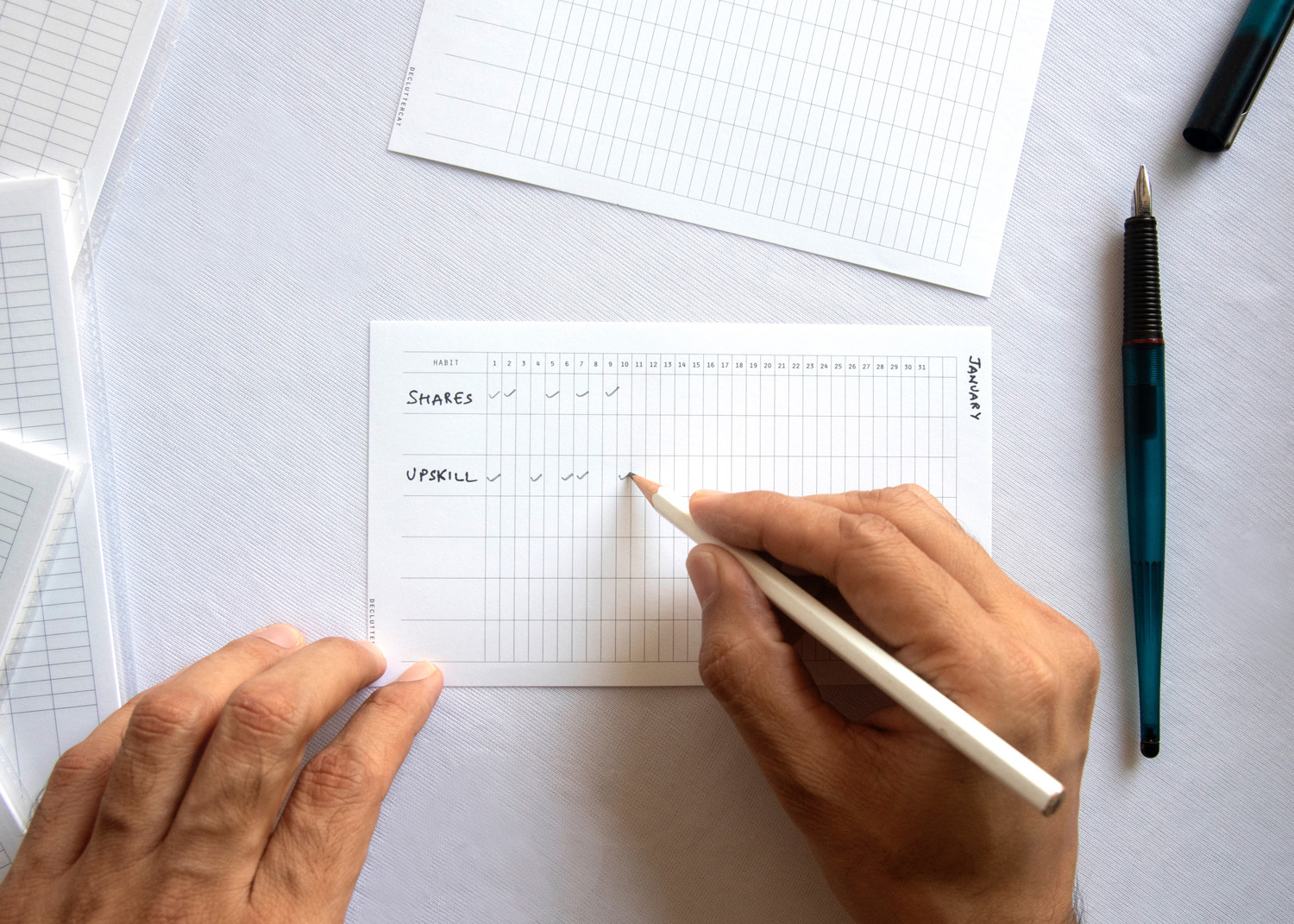
Habits that last tend to share a few qualities:
- they are small enough to return to after a break
- they are visible enough to be remembered
- they allow room for imperfection
Instead of aiming for intensity, sustainable habits lean toward gentleness. For example:
- moving your body a few times a week instead of daily workouts
- journaling when you feel the need, not out of obligation
- meditating for a few minutes when you remember, not on a strict schedule
Tracking habits down helps not because it enforces discipline, but because it creates a quiet reminder of what matters to you — especially on days when motivation feels low.
The Practice of Checking In With Yourself
If there’s one planning practice that quietly changes everything, it’s the weekly check-in.
A check-in isn’t a review of productivity or a judgment of how well you did. It’s a pause. A moment of listening.
It can happen anywhere — over a cup of tea, during a walk, while stretching, or in the few minutes before sleep. It doesn’t need structure or perfect wording. It just needs honesty and reflection.
During a check-in, you might notice things like:
- meditation felt grounding one day and impossible the next
- movement helped your mood more than expected
- calling a friend lifted your energy
- socialising felt nourishing — or draining
- rest was more necessary than motivation
This is where planning becomes deeply human. You’re not just managing tasks. You’re responding to your inner landscape. Here is a deeper read on celebrating small wins and how reflection creates clarity of thought.
When planning reflects these insights, it stops feeling like control and starts feeling like care.
Easy Check-ins to include in your planner
When people struggle to stick with habits, it’s often because the system supporting those habits is too complex or demanding. Simpler systems tend to work better — not because they’re less effective, but because they’re easier to return to.
Here are a few planning elements to consistently incorporate into your weekly planning to make habit-building feel more manageable:
- Carried over tasks
Flip through your past weeks and review incomplete tasks for what still needs to be addressed. Let these flow into your new month. - To-do lists
Start with a master list for your month. You can keep adding new items as the weeks progress. You can even make smaller weekly task lists if that makes it easier for you. - Mark important dates and events
Pen in important dates to layout your week at a glance. It is the perfect planning unit, tasks stay real and achievable. Mark daily appointments, meetings, events, wherever you can. It really helps you simplify other plans. - Weekly habit check-ins
Tracking habits weekly instead of daily reduces pressure. You’re able to see patterns without obsessing over missed days. A few checkmarks across a week can feel surprisingly encouraging. - Fewer habits at a time
Choosing three to five habits that genuinely support your life right now is far more sustainable than tracking everything at once. - Reminders
This could have many forms – a quote that inspired you, an affirmation that motivates you, a gratitude box, a mindfulness note to self or even just a general task reminder. - A short reflection space
Sometimes a single honest sentence — “This week felt heavier than expected” — offers more insight than any tracker.
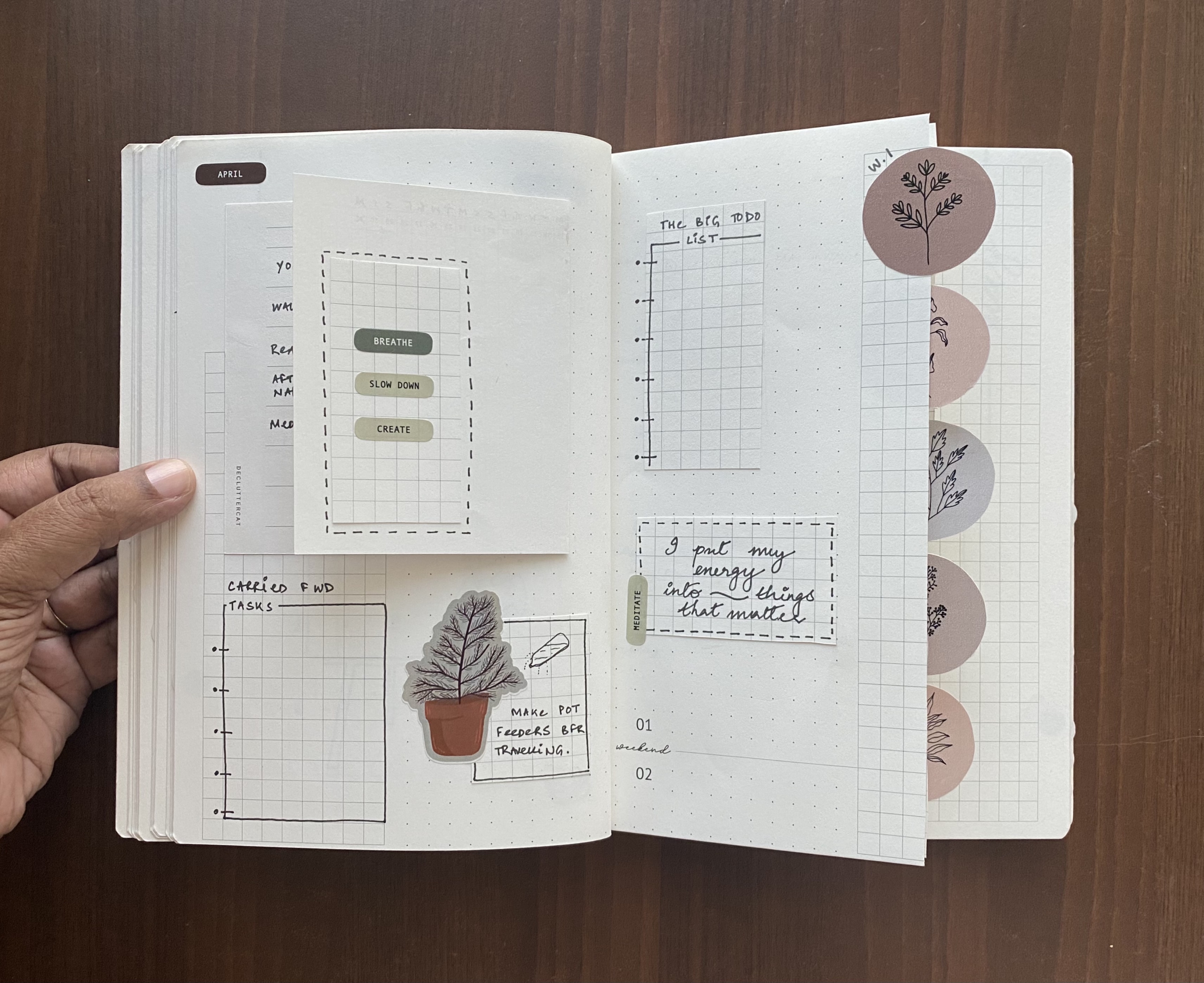 These elements don’t demand performance. They support awareness. And awareness is what allows habits to grow naturally.
Weekly Rituals: Creating Rhythm Instead of Control
Weekly rituals help translate intention into lived experience. They create rhythm — something steady you can return to, even when days feel unpredictable.
A ritual doesn’t need to be elaborate. It simply needs to be repeatable.
Some people find comfort in:
- a Sunday evening reset
- a quiet Monday morning check-in
- a mid-week pause to recalibrate
- a gentle Friday reflection
What matters is choosing a rhythm that feels supportive rather than restrictive.
Weekly rituals help you:
- notice patterns before burnout sets in
- adjust plans without guilt
- reconnect with your intentions regularly
Over time, these rituals build trust with yourself — something far more valuable than strict consistency. It isn’t about squeezing more into your schedule. It’s about finding a rhythm that feels right for you — one that brings mental clarity, space to breathe, and the confidence to show up fully in every part of your life. Here is a deep dive into tiny rituals for multitaskers seeking clarity.
Rhythm 2026: A Planner Designed to Hold Real Life
For those looking for a physical tool that aligns with this gentle approach, Rhythm 2026 was created with a simple intention: to support consistency without pressure.
It’s a lightly guided weekly planner — structured enough to provide grounding, yet spacious enough to allow real life to unfold.
What makes Rhythm different is not what it asks of you, but what it allows:
- space to write without rushing
- gentle guidance without overwhelm
- structure without rigidity
- room for both planning and reflection
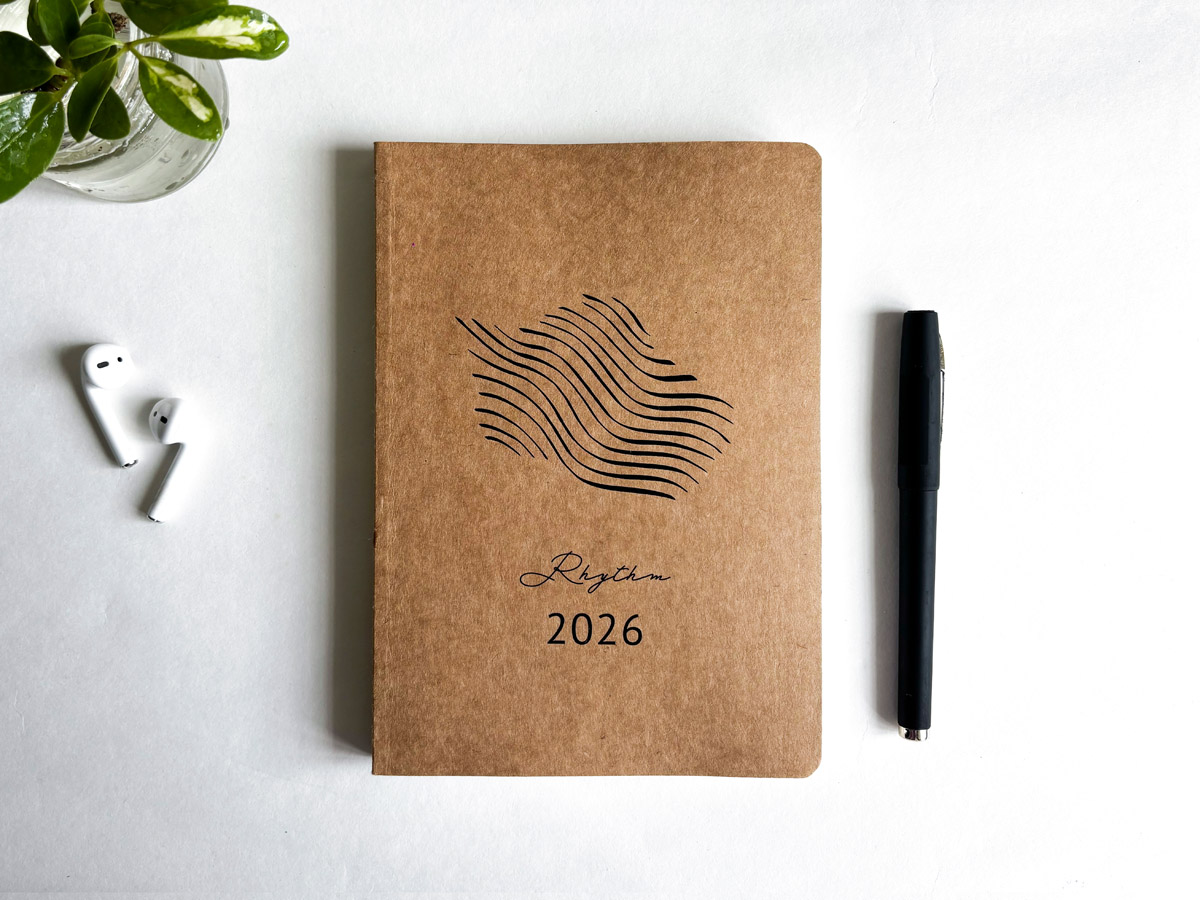
It doesn’t demand daily perfection or constant tracking. Instead, it encourages steady check-ins, flexible habit-building, and awareness over performance.
Rhythm is designed to grow with you — whether you’re easing into planning or rebuilding the habit after a break.
Meal Planning as a Quiet, Foundational Practice
Meal planning is often framed as a productivity tool — something you do to save time, be efficient, or stay “on track.” But in real life, it plays a much deeper role in how our days unfold.
When meals are left unplanned, decision fatigue tends to creep in quietly. You reach the end of the day already tired, only to be faced with yet another choice, especially if you’re also a parent, juggling, work, home, kids, it’s a lot. Energy dips. Irritation rises. Even otherwise calm days can begin to feel scattered and heavier than they need to be.
Gentle meal planning isn’t about perfection, discipline, or restriction. It isn’t about rigid charts or aspirational eating habits. At its heart, it’s about creating a baseline of support — something steady you can rely on when everything else feels full.
It’s the comfort of knowing that one part of your day is already taken care of.
Small, realistic steps often make the biggest difference:
- planning dinners before anything else, since evenings tend to be the most tiring
- repeating meals you already enjoy instead of constantly searching for novelty
- Planning even 3 meal a week is enough
- planning weekdays lightly and leaving weekends open and flexible

This kind of planning reduces friction rather than adding to it. When meals are decided in advance, mental space opens up. Evenings feel calmer. Other habits — movement, rest, journaling, connection — start to feel easier because you’re not constantly running on empty.
Over time, this steadiness compounds. Energy feels more even. You’re less reactive. You make choices from a place of care rather than urgency. Meal planning, in this way, becomes less about food and more about rhythm. It quietly supports your week without demanding attention. It holds space for nourishment — not just physical, but mental and emotional too.
At its core, meal planning is an act of self-care. A quiet one. A foundational one.
One that supports everything else you’re trying to build — gently, consistently, and without pressure. It you are just starting out, here is a read on the easiest way to start Meal Planning, even if you’re a tired parent.
Daily Planning: Letting It Emerge Slowly
Daily planning can be a very useful tool — but it doesn’t need to be mandatory to be effective. Not every day needs a detailed list, and not every phase of life benefits from strict daily structure. When daily planning is approached gently, it often becomes easier to sustain.
For many people, easing into daily planning leads to better consistency than forcing it from the start of the year. January, especially, works well as a transition month.
You might notice a natural progression:
- early January feels better with just weekly planning
- mid-January invites light daily notes or reminders
- late January allows for more intentional daily structure, if it feels supportive
What matters is that daily planning responds to your energy rather than competing with it.
Some days will need detailed lists.
Some days will need just one clear priority.
Some days will simply need space.
This is where the design of your planner makes a difference. A planner doesn’t need to push daily planning — it should be ready for it.
Helpful features often include:
- spacious layouts that allow you to plan lightly or in detail
- multiple grids or flexible sections you can use in different ways
- the ability to merge easily with other systems, like a plain journal or digital notes

When your planner can accommodate just what you need — no more, no less — daily planning becomes a quiet support. Not a rule. Not a requirement. Just a tool you can reach for when it serves you.
Finding The Right Planner
There is no single “best” planner for the new year. There is only the one that supports your rhythm in this season of life.
The right planner doesn’t ask you to adapt to it. It adapts to you. It recognises that your energy, responsibilities, and needs shift — sometimes week to week, sometimes month to month.
When choosing a planner, it helps to notice a few things:
- whether you need more space or more prompts
- whether weekly or daily layouts feel calmer right now
- whether guidance feels supportive or quietly restrictive
A good planner should feel like an invitation — not a test. It should welcome you back even after missed days or weeks, without making you feel behind.
If opening a planner fills you with pressure or guilt, it’s probably not the right fit. The right tool doesn’t demand consistency. It supports it — gently, patiently, and without judgment.
At its best, a planner becomes less about productivity and more about presence. A place you return to not because you have to, but because it helps you stay connected to your life.
Let This Be the Year You Plan With Yourself

Planning works best when it becomes a relationship with yourself — not a system you’re trying to live up to.
At its core, planning is about attention. It’s about noticing what you need and responding with care, rather than pushing through on autopilot.
Some weeks, planning may help you realise:
- you need rest instead of more discipline
- movement would support you more than motivation
- connection matters more than productivity
One week, your planner might guide you toward meditation or quiet reflection. Another week, it might remind you to call someone you’ve been meaning to check in on. Sometimes, it may simply slow you down enough to breathe.
This is planning doing its real work.
You don’t need to map the entire year in January. You only need a starting point — one that feels honest, kind, and sustainable.
Check in often.
Adjust gently.
Let planning support your life instead of shaping it forcefully.
This year doesn’t need pressure.
It needs presence.
And planning, when done with care, can help you create exactly that.